

Analyze, Upskill, Repeat!

Digitization, automation, Artificial Intelligence and various other facades of technology are posing threat to the skills that exist today.

Continue reading...

Future of Commercial and Contract Management

07-03-2025

In today’s complex business environment, the commercial contracts are required to be handled extremely carefully.

Continue reading

Analyze, Upskill, Repeat!

28-02-2024

Digitization, automation, Artificial Intelligence and various other facades of technology are posing threat to the skills that exist today.

Continue reading

More from Ashish Seth


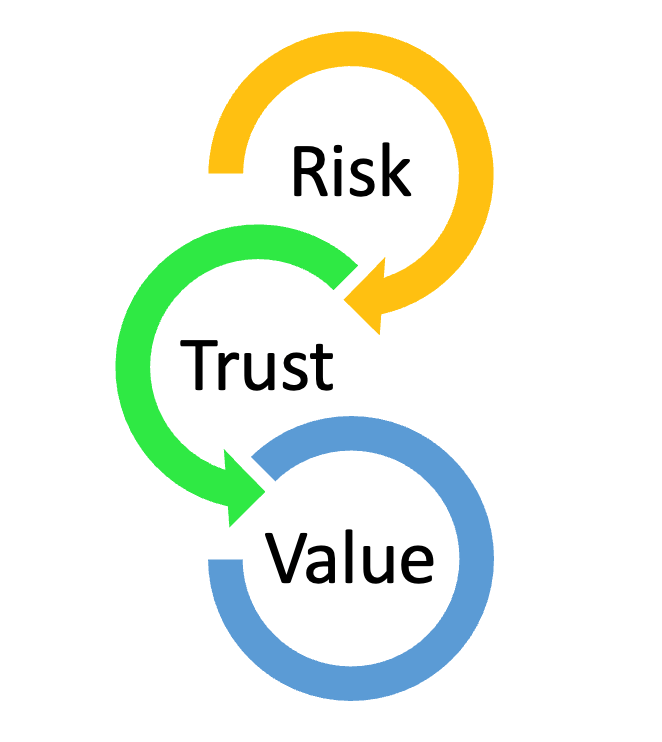
The success or failure of any business depends on its risk-taking capability. Every organization has its own risk appetite. Some organizations take a leap by venturing into unexplored areas and still emerge as leader of leaders. Some evaluate the risks, follow the leaders and adapt themselves for sustainability. While others misinterpret the risks and succumb to their own actions or inactions. Managing risks is not one-time activity, it’s a continuous journey and one instance of negligence can cause irreparable damages. Most of the times, you don’t even get a second chance to correct your mistakes.

Often, risks arise from areas which are obvious or expected. Seldom, risks can catch you totally unaware because they arise from completely unexpected or unprecedented situations. Risk taking capabilities of organizations can be evaluated by its interactions with its customers, partners, vendors and even with its own employees. It eventually reflects in the culture of the organization.

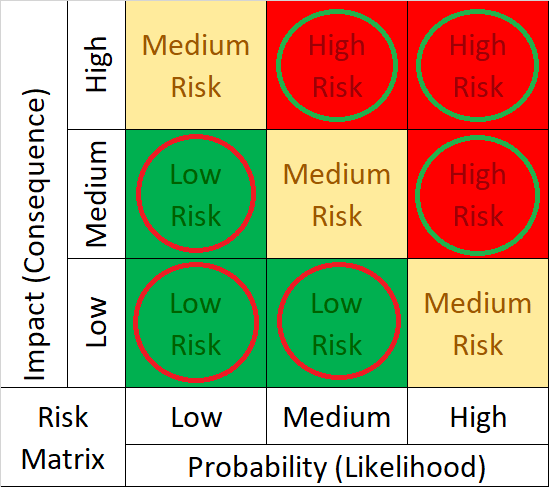
In simple terms, a risk can be defined as a possible future event that could cause harm or loss or affect the ability to achieve objectives. John F. Kennedy once said, “The best time to repair the roof is when the sun is shining”, means we don’t have to wait for something unsolicited to happen and then start working on damage control. In other words, by taking right actions at the right time, we can avoid certain unwanted situations.

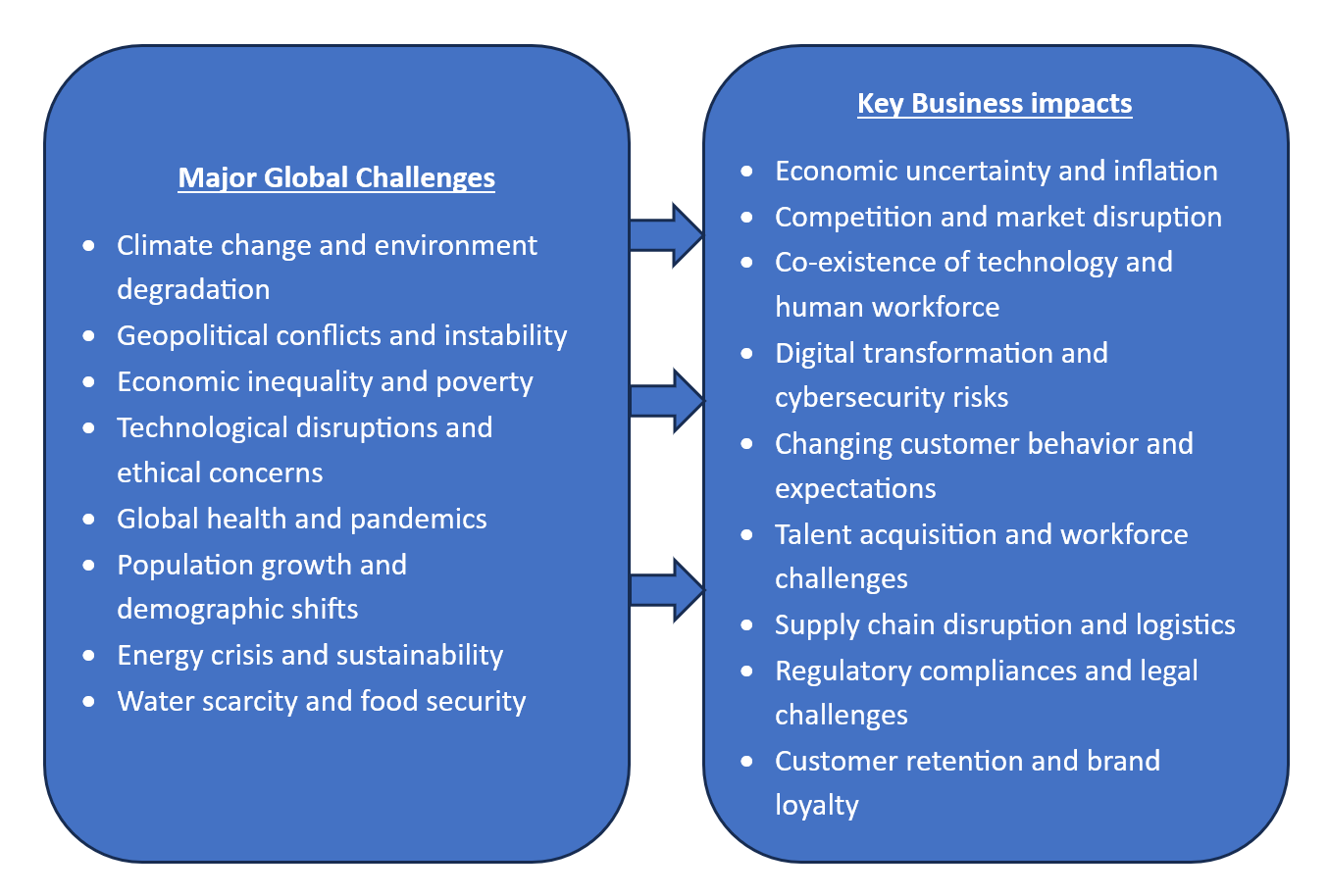
Future has always been unpredictable and will always remain so. Until few years back, the circumstances were changing at very slow pace, most of the changes were cyclic in nature and easier to predict. The pace at which the changes are taking place now is already incredible, non-cyclic and highly unpredictable. Due to these reasons, organizations need to prepare for uncertain and volatile circumstances arising due to technological disruptions, supply chain failure, fierce competition, cyber-attack, data protection, evolving regulatory requirements and global crises such as outbreak or pandemic, climate change, economic slowdown and geopolitical issues. Today, success of a project or a business depends largely on the organization’s capability of effectively managing the risks at every stage. A mistake in identification and management of a major risk could lead to the failure of entire project or even failure of entire organization. Always operating in the low risk zone can make an organization risk averse and it slowly loses business to its competition and eventually depletes.

In one of my previous blogs, I already said that technological evolutions are posing threat to the skills that exist today and at the same time, new opportunities are being created expeditiously for futuristic skills.

Risk Management is rapidly evolving as a futuristic skill in the current times. Role of Risk Management existed in several large organizations since long, primarily as a backend support function. However, the expectations are still evolving, which are bringing this role to the center stage as a leadership position. This role will not be expected to merely caution or to stop the organizations for taking risks. Whereas, risk managers are now expected to enhance the risk-taking capabilities of the organizations by enabling them to take risks in the rapidly changing business environments. Key ingredients for success in this role are deep knowledge of the industry, alertness to changes, situational thinking and strategic planning. They not only help to identify the risks, but also analyze, applying risk response strategies, developing risk response plans for identified risks. They also monitor and control the execution of risk response plans and ensure minimizing the overall risk exposure for the organization and contributing to its profitable growth.


Core purpose of any business is to create and retain customers. In today’s competitive environment, retaining customers is even more important than creating new ones for every business regardless of the industry. Reason being, it costs five to six times more to acquire a new customer on an average than it does to retain an existing one.

We have witnessed in last few decades that almost all the industries have transformed to sell their products in the form of services. Front runners have even revolutionized their futuristic products and platforms through “as-a-service” business models.

Repeat business is the life force for any organization, a source of energy essential for its existence. Customer loyalty is going to be the cutting edge of service industry in this information and technology era. Profitable organizations have already understood customer centricity as a way of doing business that provides a positive customer experience every time the customer interacts with them, irrespective of online or in person. Customer centric approach results in repeat business and customer loyalty, which eventually leads to higher profitability.

The digital advantage

Because of the opportunities that arise from using modern technologies, customers often rate organizations on their digital customer experience. Digitization, automation and evolving technologies have caused a shift in customer expectations and has disrupted the customer behavior in a big way. To add to the complexity, Covid-19 pandemic has drifted the loyalty of customers to those businesses which offer safe and reliable services.

In today’s world, anything without intervention of technology is incomplete. Evolving technology is helping many of the well-established brands, new players and startups to grow exponentially as most of those have orchestrated the way to create a delightful digital customer experience through the usage of technology.

They create user friendly design of their websites and mobile applications which not only supports to market their products or services but also makes it very easy for customers to make online purchases which is further topped up by speedy and contactless deliveries. They adopt omnichannel approach which provide seamless shopping experience to customers whether they are using a desktop, mobile phone, tablet or even a smart TV, giving a hard time to the physical stores.

To provide a delightful customer experience, technology companies are taking advantage from Artificial Intelligence, machine learning, robotization, big data, analytics, virtual reality, augmented reality and various other advancements to influence the customer behavior. Digital personalization helps to provide virtual experience of trying the products or services before buying. It could be a dress, jewelry, hair style, painting or wall covering of your home, virtual tour of a house you are evaluating to buy, specific model of a car with the color of your choice and much more without even physical presence of product or service in front of you.

Companies also use AI enabled tools for collecting and processing customer data, which helps them to do customer profiling and suggesting the products or services as per customer’s preferences. Although, customer data is collected for the purpose of providing better experience to the customers, at the same time, organizations must stay away from annoying customers by invading into their personal lives.

Satisfaction = Perception – Expectation

The customers of today are more demanding than ever before and more importantly, they have multiple choices. It is important to understand that customers have expectations, whenever they buy any product or service. The experience of buying and using the product or service creates a perceived value for them which could be positive or negative. So, the need of the hour is to deliver the services one step ahead of the customers’ expectations.

Based on various studies conducted in the field of customer behavior, we can equate customer satisfaction as difference between their perception and expectations, means Satisfaction = Perception – Expectation. This equation helps us determine if we are creating a positive or a negative experience for our customers based on their level of satisfaction, which is the main influencing factor behind customer loyalty. Due to this reason, it becomes important to monitor the customer experience at every point of interaction of customers with the business.

As per this simple equation, if perceived value from the interaction is lesser than the expectation, then it gives a feeling of displeasure to customers. This not only repels the customer for future interactions but also create further losses to the business when they share their bad experience with others either in-person or through online reviews. Hence, negative customer experience leads to immediate loss of business and damages overall brand value of the organization.

If perceived value from the entire cycle of buying and using is equal to the expectation, it results in a satisfied customer. In today’s competitive environment a merely adequate service remains invisible and large number of customers may still go to competition as they want to try something better. The lack of wow factor also results in business reduction as higher cost is required to be spent to acquire new customers.

On the other side, if perceived value exceeds customer’s expectations, it results in delightful customer experience. Now this customer will be motivated to come back again and again seeking repeated instances of great experience. Such customers will also be willing to pay higher premium for those products or services of the organizations which makes them feel good at every interaction. We need not forget that only excellent service gets noticed. Delighted customers will be motivated to share their positive experiences with others through in-person or online reviews. Feeling of great experience not only generates loyal customers, but also converts them into unpaid marketing agents.

Win-win situation through great Employee Experience

While we talk about customer experience, we can’t ignore the experience of internal customers. Internal customers are those on whom we depend for delivery of our services or products to external customers. Employees, co-workers, subordinates and employees of suppliers and service providers are examples of internal customers.

Profitable organizations realize the value of internal customers and they focus heavily on great Employee Experience as they do for wonderful customer experience. The employees of such organizations are made to feel important and receives great amount of respect through every internal policy and interactions with the top management.

Thus, positive experience of employees not only helps to build a strong brand value, it also helps to generate positive experience for the organization’s customers who often come in contact with it’s employees.

On the other side, if perceived value of employees is lesser than expectation, then employees are unhappy and frustrated. Internal friction leads to external, so disappointed employees of an organization will find it difficult to create a positive experience for its customers.

How you deliver, it matters!

You must focus on creating an experience where customers would want to come back rather than going elsewhere next time in anticipation of better experience. For creating a delightful customer experience, “how” you are delivering the service is as important as the “what” you are delivering. So, we can also say that, the way we deliver our product or service is equally or sometimes even more important than the service itself.

Customer expectations are dynamic

No organization can afford to relax because it is already successful. Changes in market conditions, technology evolutions and other factors like Covid-19 pandemic can influence customer behavior and reverse the past success very quickly. There are multiple examples around where even global leading organizations have vanished. Leaders need to preserve and consolidate their position through innovative strategies and practices keeping customer experience at the center. Above all, no business can afford to take customer for granted. You may have a great product, you may be a market leader in your segment, but if your competitor serves customer better than you, then you will lose everything. That’s the power of customer experience.

It's a journey and not a one-time affair

Expectations of customers are often influenced by similar industries or occasionally even by unrelated industries. Customer perception is fragile and can change with each interaction. Customer perception is one of the most important aspects required to be handled very carefully by any organization. Managing customer perception must be the top priority and the responsibility of every single person in any growth-oriented organization.

Customer experience is the sum of customers’ perceptions and feelings resulting from interactions with a brand’s products and services. Constantly maintaining a strong customer experience is of utmost importance. Customer experience matters the most to all those who want to stay in their job or business.

Customer needs to feel welcomed, understood, comfortable, appreciated, important and respected. Customer desires friendliness, empathy, fairness, participation, alternatives and information.

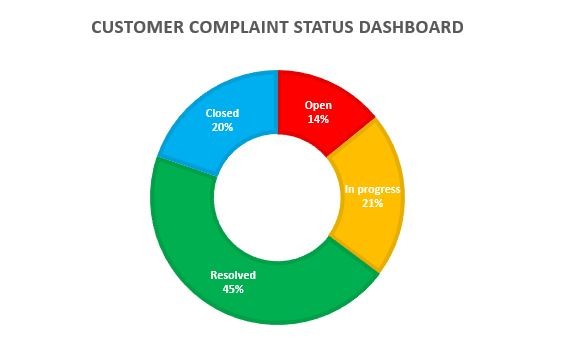
Small steps in improving the customer experience pays back in higher magnitudes. Resolving customer complaints immediately results in highest level of customer retention. Companies can boost their profitability extensively by only retaining a small percentage of their customers.

Customer Experience is not a mere FOMO!

The organizations, which are focusing on creating a delightful customer experience at every point of customer interaction are observing a multi fold increase in their sales and are on the path of profitable growth. Are you?


In today’s complex business environment, the commercial contracts are required to be handled extremely carefully. Covid-19 has created a compelling need amongst the enterprises to re-evaluate their existing contracting processes and to adopt commercially available Contract Lifecycle Management (CLM) tools. This has created huge demand for Commercial and Contract Management (CCM) skills in the organizations. Sharp CCM skills are essential for obtaining true economic value from any contractual relationship.

It’s a well-known fact that evolution of technology is posing threat to several skills that are prevailing as of today. Whereas, CCM skill has high potential to emerge as a futuristic skill. However, it will have to be quite different from what it is today as several administrative, repetitive and even intelligent tasks will be taken over by automation and technology.

Contract Lifecycle Management tools are being built on Machine Learning, Artificial Intelligence and enterprise cloud platforms which are loaded with features and has a potential to transform the way the contracts are being managed as of today. Additionally, these tools can be integrated with the Enterprise Customer Relationship Management (CRM) platforms of the organizations which enable exchange of information in real time and boosts the efficacy of overall system.

As per a survey conducted by World Commerce and Contracting (formerly known as International Association of Contract and Commercial Management- IACCM), the average cost of poor contracting is 9.2% of a firm’s annual revenue. This leakage is even higher for large and capital project industries. WorldCC has also identified 10 pitfalls which contribute to these losses in commercial contracts. The major pitfalls identified in the report are:

  • Lack of clarity on scope and goals, resulting in claims and disputes.

  • Not involving Legal/ Contract team early enough, resulting in wrong form of contract and extended lead time.

  • Protracted negotiations leading to competitive exposure and delayed revenues

  • Negotiation focus on wrong terms and risks resulting in loss of economic benefit which makes contract a weapon rather than an economic instrument.

  • Contracts lack flexibility with insufficient focus on governance. Due to this, the performance management is dominated by blames or fault finding.

  • Contracts are difficult to use and understand. Due to this, users see contract as irrelevant to business needs.

Entire contracting process can be jeopardized by not involving right stakeholders at the right time, using wrong contracting templates, negotiating on wrong terms and conditions, allocating risks to the other party, focusing too much on price and not on overall economic value of the contract, etc. Due to lack of focus and priority, we tend to ignore some important aspects in our contracts, which lead to revenue leakages, disputes and various other complications after signing of the contract. Badly written and negotiated contract often requires lot of administrative efforts from both the parties during post contracting stage and can be identified as the main reason for gross failure of business relationships. Consequences of badly written contracts are huge and cannot be remedied by any means other than amending those provisions which were overlooked during the pre-contracting stage.

It is observed that long term complex contracts require extensive monitoring and regular amendments on account of changing business needs, evolution of technology, consumer behavior, competition and various other related factors.

In this context, Commercial and Contract Management (CCM) function plays a significant role to resolve complex business challenges during pre-sales and post-sales stages. Practicing CCM Professionals must be equipped with exceptional drafting, interpretation, negotiation, pricing, decision making, coordination and project management skills. They also must have legal, business and financial acumen at a minimum. Thorough understanding of CLM Tools and CCM Processes is also an important element in this profession. Objective and performance indicators of CCM function in an organization shall include improving profitability margins, revenue growth, establishment and effective management of contractual commitments, plugging of revenue leakages, maintaining strong client-vendor relationships and simplification of contracts at a minimum. It is also essential that CCM professionals are equipped with right qualifications with a bachelor’s degree in Technical domain or Commerce or Legal with a master’s degree in Business Administration. CCM Certification coupled with effective communication, negotiation and other related soft skills are must. Strong domain knowledge is required because of highly complex and precise contractual outcomes. Continuous upgradation of skills, knowledge of industry trends and technology advancements will ensure a promising career to existing and aspiring CCM professionals.

Ashish Seth

About me

Rich and varied experience in managing complex deals and programs under Strategic Outsourcing, Managed Services, BOT, Revenue Sharing, Lumpsum Fixed Fee, Agile and various other commercial models for Engineering, IT, Telecom and Infrastructure services.

Key skills: Commercial modelling, Risk management, complex negotiations and program management

Recent posts